Free Government iPhone in Mississippi, 2026 Lifeline Guide
Mississippi residents can use Lifeline eligibility to check phone service discounts and provider device offers, but a free iPhone is not guaranteed. EBT, Medicaid, SSI, income, housing assistance, veterans benefits, or Tribal eligibility may help you qualify for Lifeline, while the actual phone offer depends on your ZIP code and provider stock.
Quick answer: Lifeline is active in Mississippi. ACP ended after households stopped receiving ACP discounts on June 1, 2024. SNAP/EBT or Mississippi Medicaid can help prove eligibility, but they do not guarantee an iPhone. Many providers offer Android phones more often than iPhones, and iPhone offers may be refurbished, limited, ZIP-code based, or unavailable.
Lifeline Free iPhone is an independent informational site. It is not a government agency, does not provide phones directly, and does not collect SSN, EBT PIN, banking details, or card details.
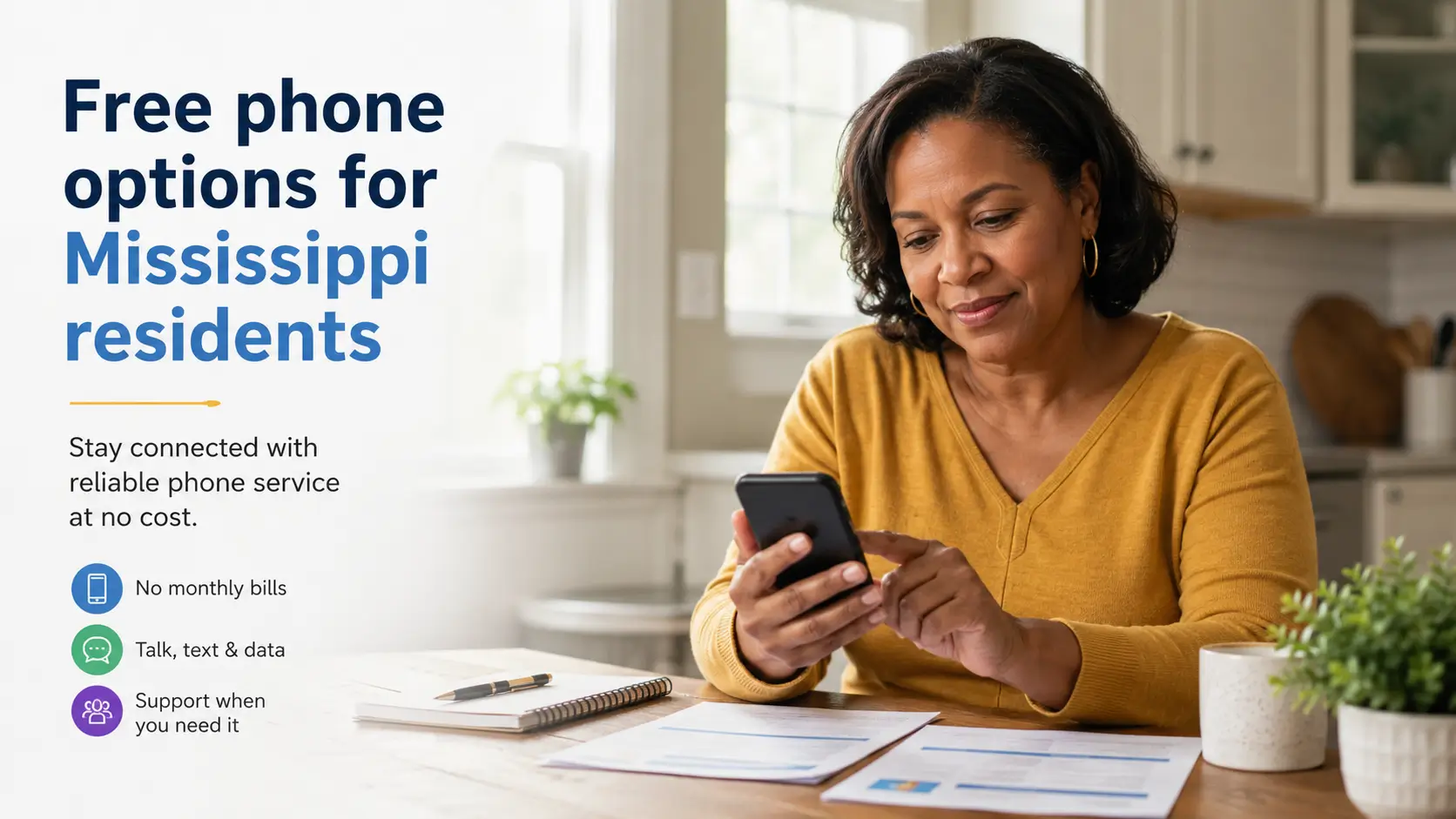
Mississippi tip: Always check by ZIP code. A provider offer in Jackson or Gulfport may not match what is available in the Delta, Pine Belt, Gulf Coast, or smaller rural communities.
What this Mississippi page covers
- Quick answer for Mississippi residents
- What “free government iPhone” means in 2026
- Does Mississippi have a free iPhone program?
- Main ways Mississippi residents may qualify
- EBT and SNAP phone options in Mississippi
- Medicaid phone options in Mississippi
- Lifeline providers and ZIP-code checks
- Phone and internet access across Mississippi
- Safe path infographic
- Documents you may need
- Apply now in Mississippi, safe guided path
- Mississippi FAQs
- Official external resources
Can Mississippi residents get a free government iPhone?
Some Mississippi residents may find free or discounted smartphone offers through Lifeline-related providers, but the government does not guarantee a free iPhone. Lifeline mainly helps eligible households reduce the cost of phone, internet, or bundled service. Any iPhone offer comes from a provider, not from a statewide Mississippi iPhone giveaway.
If you receive Mississippi SNAP benefits, use an EBT card, have Mississippi Medicaid, receive SSI, live in qualifying public housing, receive certain veterans benefits, qualify by income, or live on qualifying Tribal lands, you may have a Lifeline eligibility path. That still does not mean every provider will offer an iPhone.
For most people, the safest order is simple: confirm eligibility, gather documents, check official Lifeline verification steps, search providers by ZIP code, then compare the phone type, monthly service, activation, shipping, copay, and recertification rules.
Mississippi reality check
- Lifeline is active.
- ACP discounts ended after June 1, 2024.
- EBT and Medicaid can help prove eligibility.
- iPhone stock is provider-specific.
- Android phones are often more common.
- ZIP code affects provider availability.
- No site should ask for your EBT PIN.
What “Free Government iPhone” Means in 2026
In Mississippi, people often search “free government iPhone” because they need an affordable phone and have heard that EBT, Medicaid, or Lifeline may help. The safer way to understand it is this: Lifeline is a federal benefit that can lower the cost of phone or internet service for eligible households. A phone device, including an iPhone, is separate from the Lifeline service discount.
Some providers may advertise a free phone, discounted phone, refurbished phone, or smartphone upgrade as part of their own promotional rules. Those offers can change by ZIP code, stock, activation policy, shipping policy, device condition, and service plan. A provider may offer an Android phone in one Mississippi county, a refurbished iPhone in another area, and no free device in a third location.
This is why “free government iPhone” claims need careful reading. There is no safe reason to believe every eligible household in Jackson, Gulfport, Greenville, Tupelo, or any other part of Mississippi will receive the same device. A realistic search should include iPhone options, Android backup options, and service terms.
Important: ACP is not the same as Lifeline. ACP ended after June 1, 2024. If a website or social media seller says ACP still guarantees a free iPhone in Mississippi, treat that as a warning sign.
Does Mississippi Have a Free iPhone Program?
There is no verified official statewide program in Mississippi that guarantees a free iPhone to every eligible resident.
Mississippi residents should instead check safe options connected to Lifeline eligibility, provider device offers, public-benefit proof, and local digital access resources. These paths can be helpful, but they are not the same as a state-run iPhone giveaway.
For a realistic result, compare three things separately: your eligibility, the provider available in your ZIP code, and the device terms. A person may qualify for Lifeline and still receive a basic smartphone or Android phone rather than an iPhone.
Safe alternatives to a fake “state iPhone program”
- Use Lifeline eligibility through the National Verifier.
- Check Mississippi SNAP, Medicaid, SSI, income, housing, veterans, or Tribal eligibility.
- Search Lifeline providers by ZIP code.
- Ask providers whether the device is iPhone, Android, refurbished, new, or subject to a fee.
- Use public libraries or community support if you need internet access to apply.
- Check local community action support if you need help with documents or basic needs.
Main Ways Mississippi Residents May Qualify
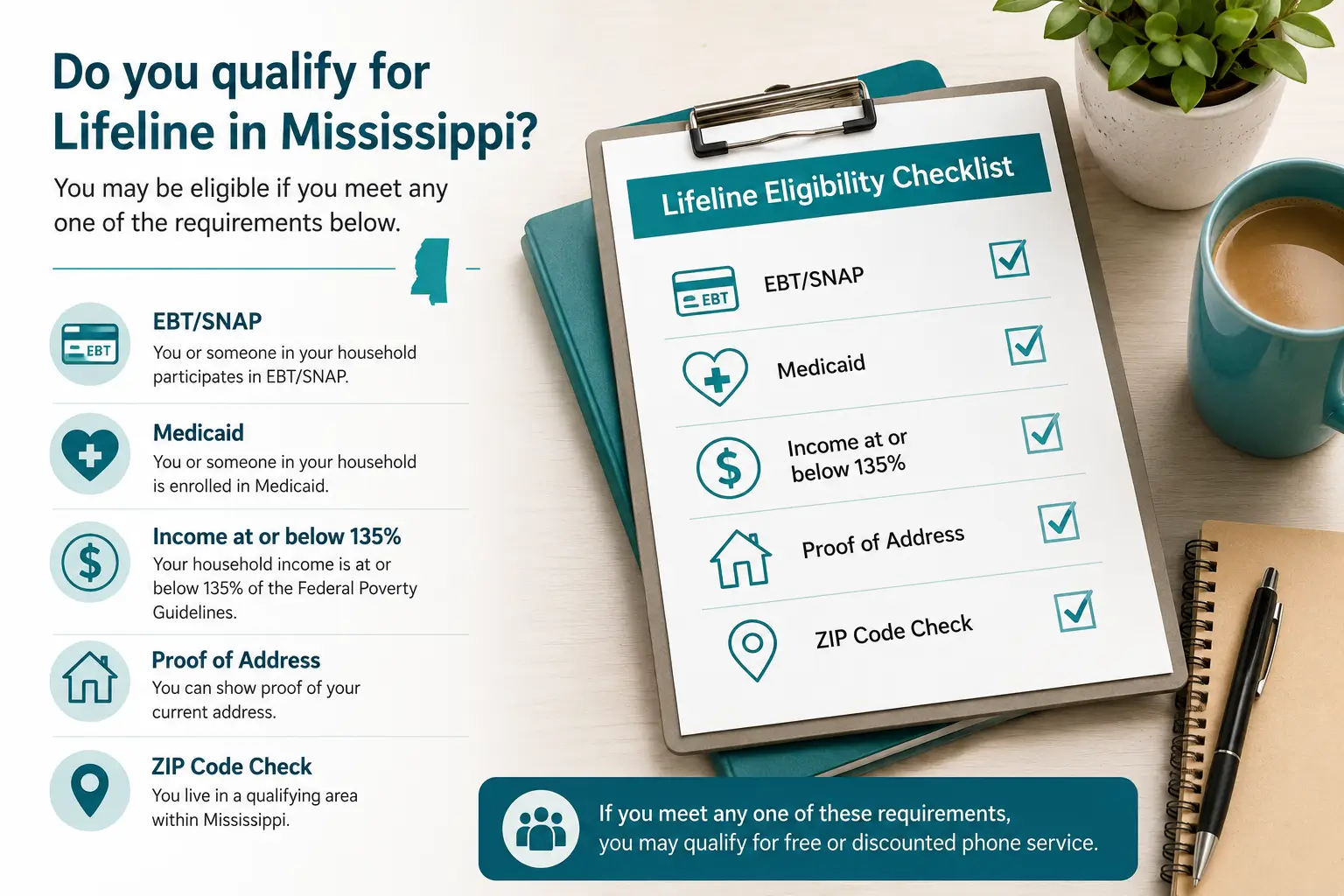
Lifeline eligibility is usually based on program participation or household income. If you already receive a qualifying benefit, you may be able to use a benefits letter, statement, portal screenshot, or other accepted document to help prove eligibility. The exact document rules depend on the National Verifier and provider process.
| Eligibility path | How it connects to Lifeline | Mississippi note |
|---|---|---|
| SNAP / EBT | SNAP participation can help prove Lifeline eligibility. | Mississippi SNAP is operated locally through the Mississippi Department of Human Services, and benefits are issued through EBT. |
| Mississippi Medicaid | Medicaid participation can help prove Lifeline eligibility. | Mississippi Medicaid is handled through the Mississippi Division of Medicaid. |
| SSI | Supplemental Security Income can be a qualifying program. | Name and address must match your Lifeline application as closely as possible. |
| Income | Households may qualify if income is at or below the Lifeline limit. | Income proof may include pay stubs, tax documents, or accepted income records. |
| FPHA / Section 8 | Federal Public Housing Assistance can be a qualifying program. | Housing letters should show the applicant or dependent name and current program information. |
| Veterans Pension or Survivors Benefit | These benefits can support Lifeline eligibility. | Keep the benefits document clear and current. |
| Qualifying Tribal programs | Tribal eligibility can qualify some households and may affect the monthly discount amount on qualifying Tribal lands. | Mississippi has Choctaw communities, so eligible Tribal households should check official Lifeline Tribal rules carefully. |
| Household rule | Lifeline is generally limited to one benefit per household. | A household means people who live together and share income and expenses. |
Simple rule: Eligibility helps you apply for Lifeline. It does not promise a specific iPhone model, free shipping, instant approval, or same-day service.
EBT and SNAP Free iPhone Options in Mississippi
Mississippi SNAP can help low-income households buy food, and benefits are issued on an EBT card. For Lifeline purposes, SNAP participation may help prove that your household meets a qualifying program path.
That does not mean the EBT card itself gives you a free iPhone. It also does not mean a provider can ask for your EBT PIN. A safe Lifeline or provider process may ask for proof that you receive SNAP, such as a benefit letter or accepted benefits screenshot, but your PIN should stay private.
Common Mississippi document issues include a name mismatch, an old benefit letter, an address that differs from your ID, or a portal screenshot that does not show the program name clearly. Before you apply, check that your proof shows your name or dependent’s name, the benefit program, the issuing agency or program administrator, and a current date where required.
For a broader EBT phone explanation, read the site’s free iPhone with EBT guide.
Medicaid Free iPhone Options in Mississippi
Mississippi Medicaid can also help prove Lifeline eligibility. If you receive Mississippi Medicaid, you may be able to use an approval letter, benefits letter, managed-care document, or accepted online account screenshot, depending on what the verifier or provider accepts.
Medicaid does not guarantee an iPhone. It can support eligibility for Lifeline, while the phone device remains a provider offer. A provider may offer a free or discounted smartphone, but the model, condition, plan, data amount, shipping, activation, and fee rules can change.
Before relying on any “Medicaid free iPhone Mississippi” claim, ask these questions: Is the offer connected to a real Lifeline provider? Does the provider serve my ZIP code? Is the phone an iPhone or Android? Is it new or refurbished? Is there a copay, shipping charge, activation fee, or minimum service rule?
Lifeline iPhone and Free Phone Options in Mississippi
Lifeline is connected to phone and internet service. The National Verifier checks whether a consumer is eligible. USAC’s Companies Near Me tool helps users search participating companies by ZIP code, city, and state. After that, the provider’s own rules decide whether any phone device is available.
This matters in Mississippi because provider coverage can vary widely between urban, rural, coastal, and Delta areas. A person in Southaven may see different options than someone in Greenville, Meridian, Laurel, Natchez, or a smaller community near the state line. Even within a city, one ZIP code can show different results from another.
Start with provider comparison guidance, then check the official provider route. If you see iPhone wording, read the terms carefully. If the offer says “smartphone,” “5G phone,” or “free device,” it may not mean iPhone.
What to compare before applying
- Monthly service included with Lifeline
- Data, talk, and text limits
- iPhone vs Android wording
- New vs refurbished device condition
- Activation cost
- Shipping cost and delivery area
- Copay or upgrade fee
- Recertification rules
- Customer support access
- Whether the provider serves your exact ZIP code
Phone and Internet Access Issues Across Mississippi
Mississippi searches for Lifeline phones do not all come from the same type of community. Residents in Jackson, Gulfport, Southaven, Hattiesburg, Biloxi, Tupelo, Meridian, Olive Branch, Greenville, Horn Lake, Starkville, Oxford, Vicksburg, Pascagoula, and smaller towns may see different provider options because Lifeline availability is checked by ZIP code.
Metro areas may have more provider choices, but that does not guarantee an iPhone. Rural counties, Delta communities, parts of the Pine Belt, northeast Mississippi, and some Gulf Coast areas may face fewer provider options, weaker mobile coverage, or slower shipping. Border communities near Tennessee, Alabama, Louisiana, or Arkansas can also see confusing provider marketing that does not always match the resident’s ZIP code.
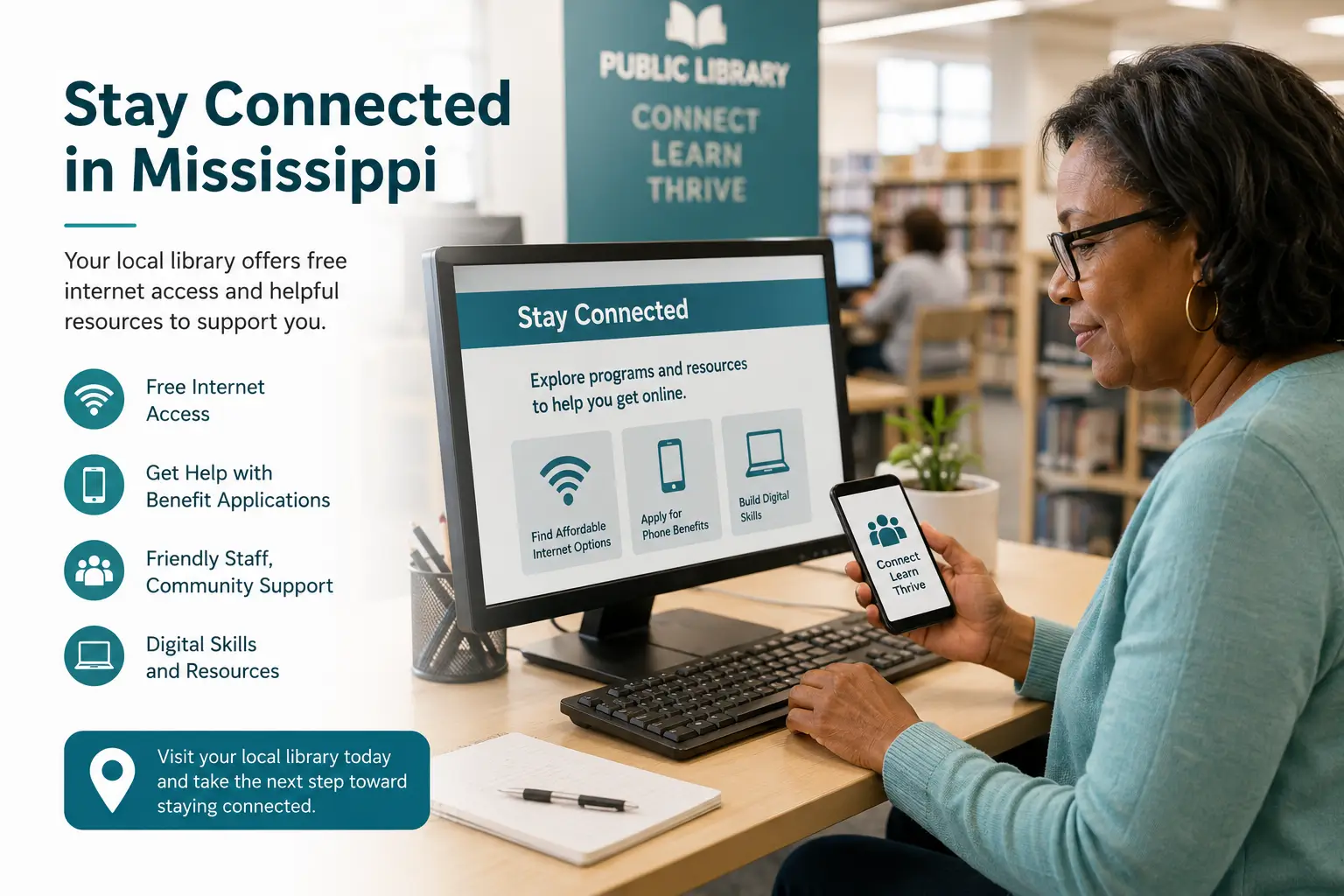
BEAM, Mississippi’s broadband office, focuses on broadband expansion and digital skills across the state. The Mississippi Library Commission supports public libraries and statewide resources, and local libraries may be helpful if you need internet access to check Lifeline steps or print documents. Mississippi’s Project START can be relevant for people with disabilities who need assistive technology support, device access, or computer-related help.
Mississippi situations that can slow an application
- Your benefit letter has an old address.
- Your ID uses a PO Box but the provider needs a service address.
- Your SNAP or Medicaid proof does not show your name clearly.
- Your rural ZIP code has fewer Lifeline providers.
- Your area has mobile coverage gaps.
- You see an ad for an iPhone, but the provider page only says “smartphone.”
- A social media seller asks for your EBT PIN or card details.
Safe Path to Check Lifeline iPhone Options in Mississippi
Use this path before trusting any “guaranteed free iPhone” claim. It keeps eligibility, provider availability, device expectations, and scam safety in the right order.
Confirm eligibility
Check SNAP/EBT, Medicaid, SSI, income, housing, veterans, or qualifying Tribal eligibility.
Use official route
Follow Lifeline and National Verifier steps before trusting provider promises.
Search by ZIP
Provider availability changes inside Mississippi, even between nearby ZIP codes.
Compare devices
Check iPhone, Android, 5G, refurbished condition, fees, shipping, and service terms.
Apply safely
Use a real provider or official Lifeline channel. Keep copies of confirmations.
Avoid scams
Do not share EBT PIN, bank details, card details, or pay suspicious approval fees.
Documents You May Need
Many delays happen because a document does not show the right name, program, address, or date. Before using the safe application steps, prepare clear copies and check that your details match.
| Document type | Examples | Mississippi application tip |
|---|---|---|
| Identity proof | State ID, driver’s license, passport, or accepted identity document. | Use the same name that appears on your SNAP, Medicaid, SSI, or income proof. |
| Address proof | Utility bill, lease, benefits letter, or accepted official mail. | Rural route, PO Box, and service-address differences may need extra attention. |
| Benefit proof | SNAP letter, Medicaid approval, SSI award, housing assistance letter, veterans benefit document. | Make sure the program name and current date are visible. |
| Income proof | Pay stubs, tax return, unemployment statement, or accepted income record. | Use income documents only if you are not applying through a qualifying benefit. |
| Household worksheet | Lifeline household worksheet when someone else at the address has Lifeline. | This can matter in shared housing, family homes, apartments, or shelters. |
| Tribal documents | Accepted proof of qualifying Tribal program participation if relevant. | Choctaw households should use official documents and check Tribal Lifeline rules carefully. |
| Mismatch explanation | Extra proof when name, address, or benefit record does not match. | Fixing mismatches before submission can prevent avoidable manual review. |
Do not upload sensitive details to random sites. Use official Lifeline, National Verifier, or legitimate provider channels. This website is informational and does not collect private application data.
Apply Now in Mississippi, Without Using a Fake Form
This section is a safe application guide, not a phone application form. Lifeline Free iPhone does not collect SSN, EBT card numbers, EBT PINs, bank details, card details, date of birth, phone numbers, or addresses.
1. Eligibility pre-check
Choose the most likely eligibility route before you apply: Mississippi SNAP/EBT, Mississippi Medicaid, SSI, income, housing assistance, veterans benefits, or qualifying Tribal eligibility.
- I receive SNAP or use EBT.
- I receive Mississippi Medicaid.
- I receive SSI or qualifying federal assistance.
- I may qualify by income.
- I need to check the household rule.
2. Document readiness
Gather clear documents before starting. A blurry screenshot or old letter can slow the process. Your proof should show your name, program, issuing source, and a current date where required.
- Name matches across documents.
- Address is current.
- Benefit proof is readable.
- Income proof is ready if needed.
- No EBT PIN is shared.
3. ZIP code provider check
Use ZIP-code provider checks because Mississippi availability changes by area. Jackson, Gulfport, Southaven, Hattiesburg, Delta towns, and rural counties may not show the same offers.
Review provider options before trusting a social media ad or copied provider name.
4. Device expectation check
Ask whether the offer is an iPhone, Android, basic smartphone, 5G phone, refurbished device, or discounted upgrade. Also check fees, shipping, activation, and service terms.
If no iPhone is available, a free 5G government phone option or Android smartphone may still help you stay connected.
Reminder: Approval is not guaranteed. iPhone stock is not guaranteed. Device type, provider availability, fees, shipping, and service terms can change.
Provider Availability and ZIP Code Checks
ZIP code matters in Mississippi. A provider may serve one city but not another. A provider may show service in one part of a county but not offer the same device in another area. A provider may also change iPhone stock without notice.
City residents may see more options, but more providers does not mean an iPhone is guaranteed. Rural residents may have fewer choices, but a smaller provider or service-only Lifeline option may still be useful. If your goal is phone service first, do not ignore a reliable Android or free 5G phone just because the ad you saw mentioned iPhone.
Before choosing a provider, compare monthly service, data, activation, shipping, copay, device condition, customer support, recertification, and whether the provider can serve your Mississippi ZIP code. Start with the site’s provider options page and then confirm through official provider or Lifeline channels.
What To Do If No iPhone Offer Is Available
If no provider offers an iPhone in your Mississippi ZIP code, you still have practical options. The first goal is reliable phone or internet access. A free or discounted Android phone may be more useful than waiting for an iPhone offer that may never appear in your area.
- Accept Lifeline service first if the plan fits your needs.
- Compare Android smartphone offers.
- Check free 5G government phone options.
- Buy a low-cost refurbished iPhone separately if you can afford it safely.
- Use public library Wi-Fi or computers for application access.
- Check BEAM and local digital access resources.
- Contact a community action agency if you need help with basic needs or documents.
- Check Project START if disability-related assistive technology support is relevant.
Do not pay a suspicious “approval fee”
If someone says you must pay first to unlock a guaranteed iPhone, stop and verify the provider. Real Lifeline eligibility does not require you to send money to a random social media agent, WhatsApp contact, or Telegram seller.
Special Groups in Mississippi
Seniors
Mississippi seniors may qualify through Medicaid, SSI, income, housing assistance, or veterans-related benefits. Simple phones, clear service terms, and customer support may matter more than the device brand. Read the senior phone guide for safer expectations.
Families with SNAP or EBT
Families using Mississippi SNAP may be able to use SNAP proof for Lifeline eligibility. Keep the EBT PIN private. The EBT card is not a phone voucher, and it does not guarantee an iPhone.
Medicaid households
Mississippi Medicaid can help support Lifeline eligibility. A Medicaid document should be current, readable, and tied to the applicant or dependent where allowed.
Rural residents
Rural Mississippi residents may face fewer providers, weaker mobile coverage, or more shipping limits. Check service coverage before focusing only on the phone model.
Students and adult learners
Students and adult learners in Oxford, Starkville, Hattiesburg, Jackson, and community college towns should check household rules carefully. Being a student alone does not automatically qualify someone for Lifeline.
Tribal households
Eligible households on qualifying Tribal lands may have different Lifeline benefit rules. Mississippi Choctaw households should use official Tribal and Lifeline sources to confirm eligibility and documents.
Scam Warnings for Mississippi Residents
Phone assistance searches attract scams because people need help quickly. A safe website or provider should not pressure you with fake approval language or ask for private details that are not needed for a public-benefit phone search.
Warning signs
- “Guaranteed free iPhone today”
- Fake government logos or fake approval stamps
- ACP claims after ACP ended
- Requests for your EBT PIN
- Requests for bank or card details
- “Pay first to unlock approval”
- Social media-only sellers
- Fake tracking numbers
- Guaranteed iPhone 13 claims without terms
- WhatsApp or Telegram-only agents
- Copied provider names
- Websites that hide contact information
Helpful checklist before you apply
- Confirm benefit or income eligibility.
- Check the household rule.
- Gather documents before applying.
- Match name and address across documents.
- Compare providers by ZIP code.
- Read device terms carefully.
- Check iPhone vs Android availability.
- Protect your EBT PIN and SSN.
- Save confirmation emails.
- Recertify when required.
FAQs About Free Government iPhones in Mississippi
Can I get a free government iPhone in Mississippi?
You may be able to find a free or discounted smartphone offer through a Lifeline provider, but there is no guaranteed government iPhone program in Mississippi. Lifeline mainly helps with phone or internet service, while iPhone availability depends on provider offers, ZIP code, stock, and terms.
Does Mississippi EBT qualify me for a free iPhone?
Mississippi SNAP or EBT can help prove Lifeline eligibility, but it does not guarantee a free iPhone. You still need to check Lifeline rules, provider availability, device type, and any fees.
Can Mississippi Medicaid help me get a Lifeline phone?
Yes, Mississippi Medicaid can help support Lifeline eligibility. Medicaid proof may help you qualify for the service discount, but it does not promise an iPhone or a specific phone model.
Is Lifeline still active in Mississippi after ACP ended?
Yes. Lifeline is still active. ACP ended after households stopped receiving ACP discounts on June 1, 2024, but Lifeline remains a separate federal phone and internet assistance program.
Are iPhones guaranteed through Mississippi Lifeline providers?
No. iPhones are not guaranteed. Some providers may advertise iPhone or smartphone offers, but stock, ZIP code, activation rules, shipping, device condition, and provider terms decide what is actually available.
What if only an Android phone is available in my Mississippi ZIP code?
An Android phone may still be a useful option if it includes reliable talk, text, data, and service coverage. Many Lifeline providers offer Android smartphones more often than iPhones.
Can seniors in Mississippi apply for Lifeline phone help?
Yes. Seniors may qualify through Medicaid, SSI, income, housing assistance, veterans benefits, or another accepted path. The safest step is to check eligibility and compare provider options by ZIP code.
Do rural Mississippi residents have fewer provider options?
Some rural residents may see fewer Lifeline providers or weaker mobile coverage than larger metro areas. Rural ZIP codes should be checked directly before relying on a provider advertisement.
Do Jackson, Gulfport, Southaven, and Hattiesburg get the same phone offers?
No. Provider offers can vary by ZIP code, even inside the same state. A phone option shown in Jackson may not match what is available in Gulfport, Southaven, Hattiesburg, the Delta, or the Pine Belt.
What documents should I prepare for a Mississippi Lifeline application?
You may need proof of identity, address, qualifying benefit, income, or household status. SNAP, Medicaid, SSI, housing, veterans, or Tribal documents should be clear, current, and show your name where required.
Should I give my EBT PIN to get a free iPhone?
No. Never share your EBT PIN for a phone offer. A legitimate eligibility process may ask for proof of benefit participation, but your PIN should remain private.
How do I avoid fake Mississippi free iPhone scams?
Avoid sites or sellers that promise guaranteed approval, claim ACP still guarantees phones, ask for bank details, require suspicious approval fees, or only communicate through WhatsApp, Telegram, or social media.
Final Helpful Summary
Mississippi residents can safely check free or discounted phone options through Lifeline eligibility, but a free iPhone is not guaranteed. SNAP/EBT, Mississippi Medicaid, SSI, income, housing assistance, veterans benefits, and qualifying Tribal programs may help prove eligibility. The next step is to gather documents, use official Lifeline or provider channels, search by ZIP code, compare device terms, and avoid anyone promising a guaranteed iPhone for a fee or asking for your EBT PIN.
External Resources
Use official sources for eligibility, documents, provider searches, Mississippi benefits, broadband access, libraries, assistive technology, and community support.